
Why Two Tents Beat One Every Time
Running a single tent is like trying to cook dinner with one burner. Sure, it works, but you’re always waiting around. A two tent grow setup changes everything. One tent stays in veg (18/6 light schedule), the other in flower (12/12). While your flowering plants finish up, new ones are getting ready in veg.
The math is simple: instead of harvesting every 3-4 months, you’re looking at fresh buds every 6-8 weeks. That’s the difference between rationing your stash and having jars full of options.
But here’s what most guides won’t tell you upfront — this isn’t just about buying two tents and calling it done. The sizing matters. The timing matters. And if you screw up the plant rotation, you’ll end up with gaps in your supply worse than running a single tent.
Plan your grow visually with Plantegia — a free Gantt-style planner built for growers.
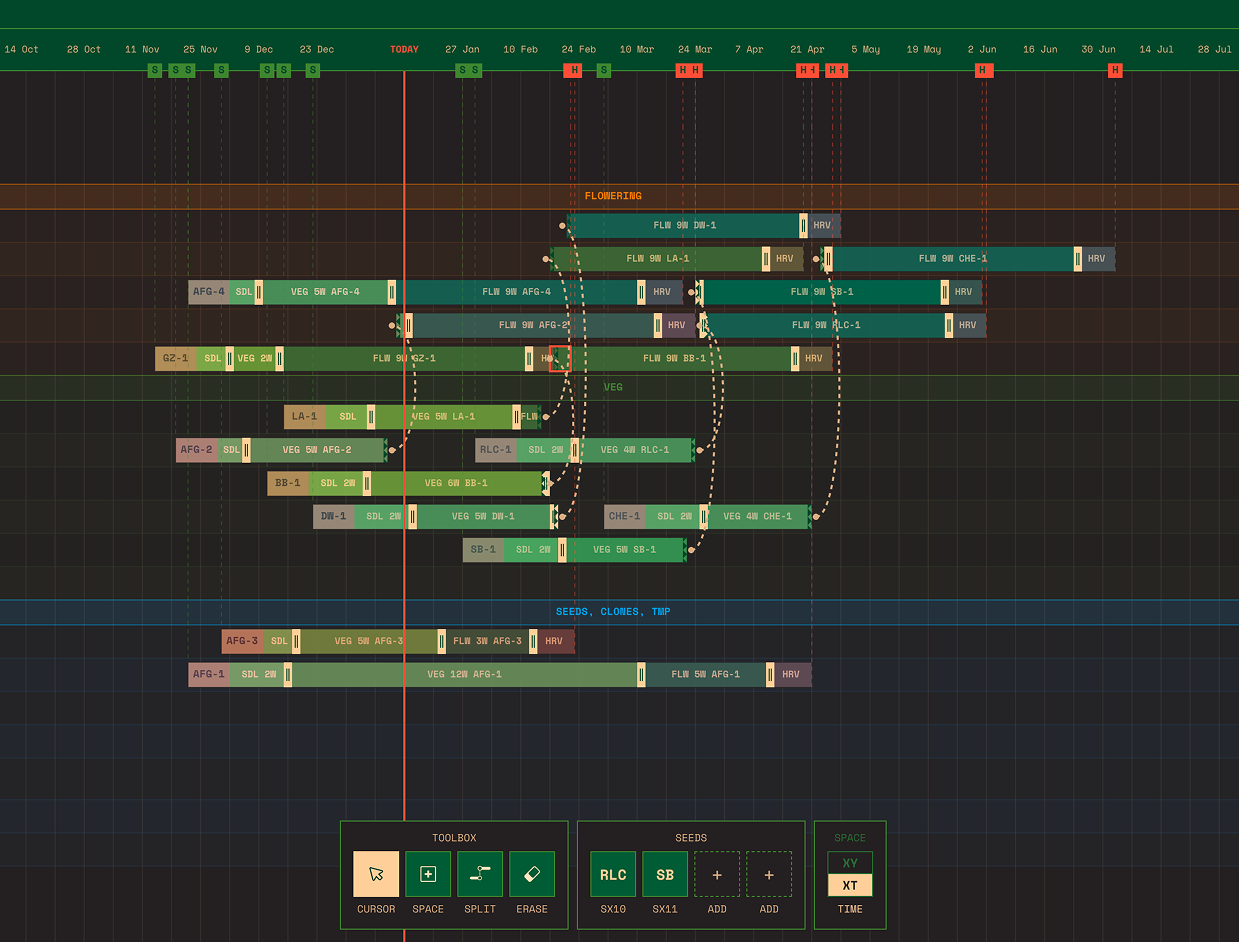
Drag plants across time. See germination through harvest. Start planning →
The Foundation: Sizing Your Veg and Flower Tents
Your flower tent should be bigger. Period. Plants stretch 2-3x their veg size once you flip to 12/12, and they need space to breathe. A cramped flower tent kills yields faster than bad genetics.
Here’s the sizing that actually works:
For 4-6 plants total:
- Veg tent: 2x2 or 2x4
- Flower tent: 3x3 or 4x4
For 6-10 plants total:
- Veg tent: 2x4 or 3x3
- Flower tent: 4x4 or 4x8
Your veg tent doesn’t need to be huge. You’re only keeping 2-4 plants in there at any time. Don’t overthink it.
The flower tent needs room for the stretch, plus airflow between plants. Cramming 8 plants into a 3x3 because “they fit in veg” is how you get bud rot and disappointing yields. How many plants actually fit in each tent size depends on your training method, but start conservative.
Plantegia’s Space view lets you drag plants around both tents to see what fits before you commit to a plant count. Way better than discovering your flower tent is too small after you’ve already flipped.
Light Schedules That Actually Work
This is where people overthink things. Your veg tent runs 18/6. Your flower tent runs 12/12. That’s it.
But the timing of when you run those lights matters for your electric bill and heat management:
Option 1: Staggered Schedule
- Veg lights: 6am-12am (18 hours)
- Flower lights: 6pm-6am (12 hours)
This spreads your power draw and keeps heat more manageable. Your flower tent runs during cooler nighttime hours.
Option 2: Overlapping Schedule
- Veg lights: 6am-12am (18 hours)
- Flower lights: 6am-6pm (12 hours)
Both tents run during the day, lights off at night. Simpler to manage, but higher peak power draw and more heat during the day.
Most growers prefer the staggered approach. Lower electric bills and easier temperature control win every time.
The Plant Rotation That Keeps Supply Flowing
Here’s where most two tent setups fall apart. People flip plants to flower whenever they feel like it, then wonder why they have feast-or-famine harvests.
The secret is consistent timing. Pick a schedule and stick to it:
8-Week Rotation (Recommended):
- Week 1-4: Plants in veg tent
- Week 5-12: Plants in flower tent
- Week 13: Harvest
Every 8 weeks, you move plants from veg to flower and start new seeds/clones in veg. This gives you a harvest every 8 weeks once the cycle is established.
6-Week Rotation (Advanced):
- Week 1-3: Plants in veg tent
- Week 4-11: Plants in flower tent
- Week 12: Harvest
Harvest every 6 weeks, but requires tighter timing and faster veg growth. Only attempt this if you’ve dialed in your veg environment.
The key is moving plants on schedule, not when they “look ready.” Your flower tent has a schedule to keep. If plants need more veg time, start them earlier or adjust your rotation timing.
Plantegia’s timeline view shows you exactly when to flip plants and when your next harvest hits. Drag plants along the timeline to see how schedule changes affect your supply gaps.
Equipment You Actually Need (And What You Don’t)
Essential for each tent:
- LED grow light (different spectrums for veg/flower, or full-spectrum for both)
- Exhaust fan and carbon filter
- Oscillating fan for air circulation
- Temperature/humidity monitor
Shared between tents:
- pH meter and calibration solution
- Nutrients (same base nutrients work for both stages)
- Watering equipment
- Training supplies (ties, clips, etc.)
Don’t waste money on:
- Separate nutrient lines for veg/flower (adjust ratios instead)
- Expensive “veg-specific” or “flower-specific” lights (good full-spectrum LEDs work for both)
- Separate everything (pumps, timers, etc. can often be shared)
The biggest equipment mistake? Buying two of everything when one good version can handle both tents. Your pH meter doesn’t care which tent it’s in.
Common Mistakes That Kill Two Tent Setups
Mistake 1: Wrong tent sizes Buying two identical tents because it “looks cleaner.” Your flower tent needs more space. Period.
Mistake 2: Inconsistent timing Flipping plants to flower “when they look ready” instead of on schedule. This creates supply gaps that defeat the whole purpose.
Mistake 3: Overcrowding the flower tent Cramming too many plants in flower because they fit fine in veg. Plants stretch. Plan for it.
Mistake 4: Ignoring environmental differences Running identical temperature and humidity in both tents. Flowering plants prefer slightly lower humidity to prevent bud rot.
Mistake 5: Starting too many plants at once Trying to fill both tents immediately instead of building up your rotation gradually. Start with one tent, add the second once you’ve got plants ready to flip.
Environmental Control: Veg vs Flower Requirements
Your tents need different environments. Cookie-cutter settings don’t work.
Veg tent targets:
- Temperature: 70-80°F
- Humidity: 60-70% RH
- Light schedule: 18/6
Flower tent targets:
- Temperature: 65-75°F
- Humidity: 40-50% RH (lower prevents bud rot)
- Light schedule: 12/12
The flower tent runs cooler and drier. This isn’t optional — high humidity during flower is how you get moldy buds and ruined harvests.
If you can only control one environment, prioritize the flower tent. Veg plants are more forgiving. Flowering plants will punish environmental mistakes with reduced yields and quality issues.
Setting Up Your Plant Pipeline
The best two tent setup is worthless without a steady supply of plants to move through it. Here’s how to keep the pipeline full:
Week 1: Start seeds or take clones Week 2-4: Veg growth and training Week 5: Move to flower tent, start new seeds/clones Week 6-12: Flower development Week 13: Harvest, clean tent, move next batch from veg
This assumes 8-week rotations. Adjust timing based on your strains and growing style.
Keep a mother plant if you’re running clones, or maintain a seed starting schedule if you’re growing from seed. The worst feeling is having an empty veg tent because you forgot to start new plants.
Strain Selection for Two Tent Success
Not all strains work equally well in a two tent rotation. Some take forever to veg, others stretch like crazy in flower.
Good two tent strains:
- Consistent 8-10 week flower times
- Moderate stretch (2x or less)
- Predictable growth patterns
- Stable genetics
Avoid for two tent setups:
- Long flowering sativas (12+ weeks)
- Extremely stretchy strains (3x+ stretch)
- Unstable genetics with unpredictable timing
- Autoflowers (they don’t fit the veg/flower tent model)
Stick to proven photoperiod strains with known characteristics. Perpetual harvest success depends on predictable timing, and unknown genetics throw wrenches in your rotation.
Making the Numbers Work: Cost vs Yield
A two tent setup costs more upfront but pays for itself in consistent supply and higher annual yields.
Additional costs:
- Second tent: $100-300
- Second light: $100-500
- Extra ventilation: $100-200
- Higher electric bills: $20-50/month
Payoff:
- 50-100% more annual yield
- Consistent supply (no dry spells)
- Better quality (dedicated flower environment)
- Flexibility to experiment with different strains
Most growers break even within 6-12 months, then enjoy the benefits for years. The real value isn’t just more weed — it’s never running out.
Planning Your Two Tent Timeline
The hardest part of a two tent setup isn’t the equipment — it’s keeping track of when to move plants and start new ones. Miss your timing by a week and you’ve got supply gaps.
Plantegia’s timeline view solves this by showing your entire rotation schedule in one place. Drag plants between veg and flower stages to see how timing changes affect your harvest dates. Set up your 8-week rotations once, then follow the schedule.
You can also use the Space view to plan how many plants fit in each tent at different growth stages. Better to figure out your limits in the planning tool than by cramming too many plants into your flower tent.
Try the free planner to map out your two tent rotation before you buy equipment. See your harvest schedule, spot potential gaps, and adjust plant counts until everything flows smoothly.
FAQ
Q: Can I use the same nutrients for both tents? A: Yes. Use the same base nutrients but adjust the ratios. Higher nitrogen in veg, higher phosphorus and potassium in flower. Most nutrient lines have feeding charts that cover both stages.
Q: How long should I veg plants before flipping to flower? A: 3-4 weeks for most setups. This gives you 12-18 inch plants that will finish around 24-36 inches after stretch. Adjust based on your flower tent height and training methods.
Q: What if my flower tent gets overcrowded? A: Reduce your plant count for the next rotation. Better to grow fewer plants well than cram too many and hurt yields. Use training techniques like SCROG to maximize space efficiency.
Q: Should I run different light spectrums in each tent? A: Not necessary with modern full-spectrum LEDs. If you want to optimize, use more blue in veg and more red in flower, but good full-spectrum lights work fine for both stages.
Q: How do I prevent supply gaps when starting a two tent setup? A: Start with one tent in flower, keep the second tent ready. When those plants are 4-6 weeks into flower, start your veg tent. This staggers your first harvest and gets your rotation established without gaps.